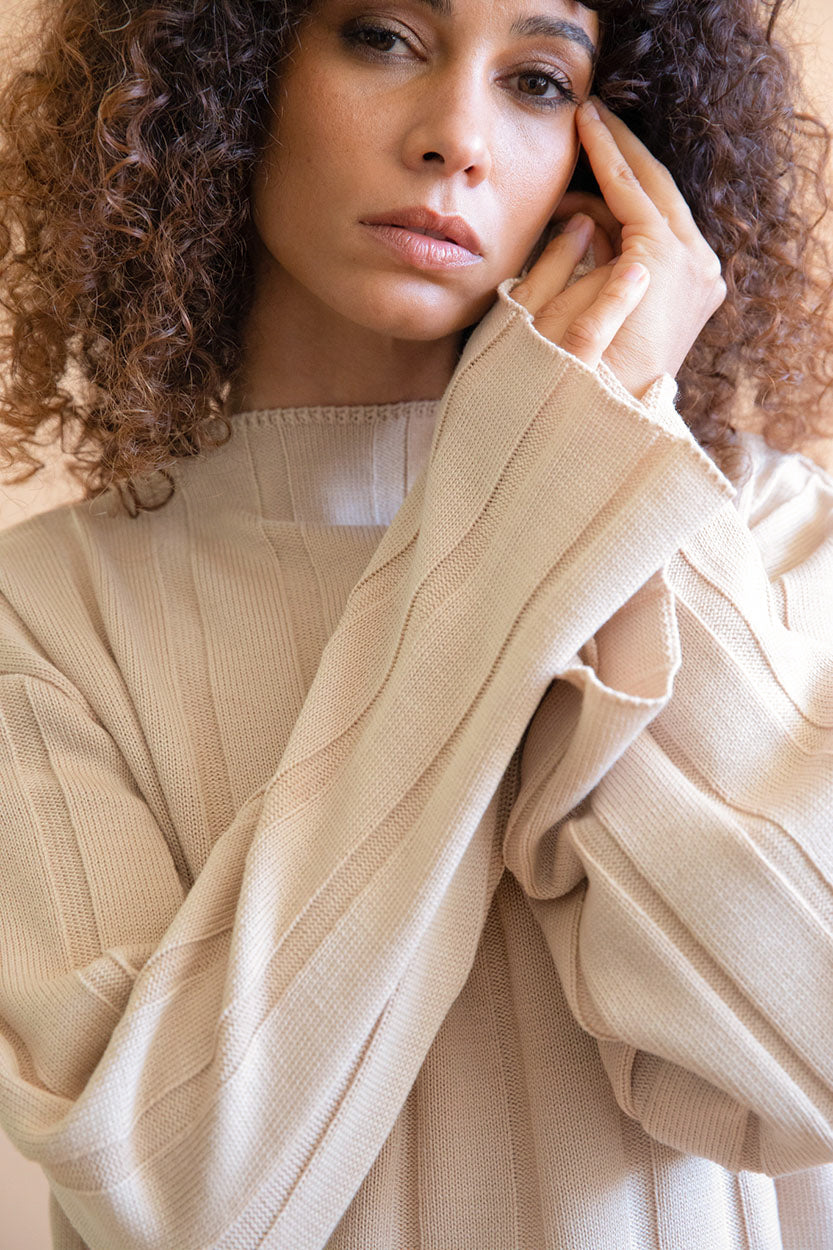


In the world of natural fibers, merino wool holds a unique place. This exceptional fiber, sourced from the merino sheep, is revolutionizing sustainable fashion thanks to its unique properties that combine performance, comfort, and environmental responsibility. Faced with current ecological challenges and the growing demand for sustainable clothing, merino wool is emerging as a natural alternative to synthetic materials.
This comprehensive guide will help you discover why this natural fiber has become essential for anyone looking to build a responsible, comfortable, and stylish wardrobe. From its exceptional thermoregulatory properties and practical everyday benefits to its positive environmental impact, we explore in depth what makes merino wool so special.
What is merino wool?
The origin: the Merino sheep
Merino wool comes from the Merino sheep, a breed of sheep originating in Spain that later developed primarily in Australia and New Zealand. These sheep have been selectively bred for centuries to produce wool of exceptional quality.
Unlike conventional sheep, which produce thicker, coarser wool, Merino sheep develop a fleece composed of extremely fine and soft fibers. Merino sheep typically live in regions with extreme climatic conditions, which has contributed to the natural development of their remarkable thermoregulatory properties.
A single sheep can produce between 4 and 5 kilograms of wool per year, a renewable resource that naturally regrows after each shearing.
Distinctive characteristics of the Merino sheep:
- Production of an ultra-thin fiber (15 to 24 microns in diameter)
- Natural adaptation to extreme climate variations
- Dense fleece offering high-quality wool
- Continuous growth of the wool throughout the year
An exceptional natural fiber
Merino fiber is distinguished by its unique microscopic structure. While traditional wool has fibers with a diameter of 30 to 40 microns, merino wool fibers generally measure between 15 and 24 microns, making them finer than a human hair.
This exceptional fineness explains why merino wool doesn't itch, unlike other wools that are scratchy and cause itching. The very structure of the merino wool fiber is composed of microscopic scales that create air pockets, thus providing exceptional natural insulation.
This unique composition allows merino wool to be lightweight, breathable, and incredibly comfortable against the skin. The natural fiber also possesses remarkable elasticity, allowing it to return to its original shape even after being stretched up to 30% of its length.

Pink Cosmos Sweater
The remarkable properties of merino wool
Natural thermal regulation
One of the most impressive properties of merino wool is its ability to naturally regulate body temperature. Merino wool perfectly regulates temperature, whether it's hot or cold. This thermoregulation is due to the unique structure of merino wool fibers:
The millions of air pockets trapped in the fiber create natural insulation that keeps you warm in cold weather, while allowing air to circulate to cool you down when the temperature rises.
Merino wool's thermoregulatory properties make it an ideal choice for year-round wear. According to a 2023 study by Australian Wool Innovation, merino wool garments maintain optimal body temperature 34% more effectively than synthetic fabrics. This unique ability makes merino wool particularly popular with athletes and travelers looking for versatile merino wool clothing.
Humidity management
Merino wool's ability to manage moisture is simply remarkable. The fiber can absorb up to 30% of its weight in moisture without you feeling any dampness against your skin. This hygroscopic property allows merino wool to efficiently wick away perspiration as vapor, keeping your skin dry and comfortable.
Unlike synthetic materials that trap moisture and create an unpleasant clammy feeling, merino fibers actively wick moisture away from your body. The evaporation process also generates heat, further enhancing its thermoregulating properties.
This intelligent moisture management makes merino wool the preferred choice for base layers worn directly on the skin, where managing perspiration is crucial.
Antibacterial and odor-resistant properties
Merino wool possesses natural antibacterial properties that radically distinguish it from synthetic fibers. Lanolin, a substance naturally present in the fiber, creates an environment hostile to odor-causing bacteria. Merino wool naturally neutralizes odors, meaning you can wear your merino wool garments for several consecutive days without them developing unpleasant smells.
This exceptional characteristic significantly reduces the frequency of washing required, extending the lifespan of merino garments while also reducing your water and energy consumption. The moisture-regulating properties also help limit bacterial growth, as bacteria thrive in humid environments.
Many travelers and hikers report being able to wear merino wool t-shirts for an entire week during treks without any olfactory discomfort.
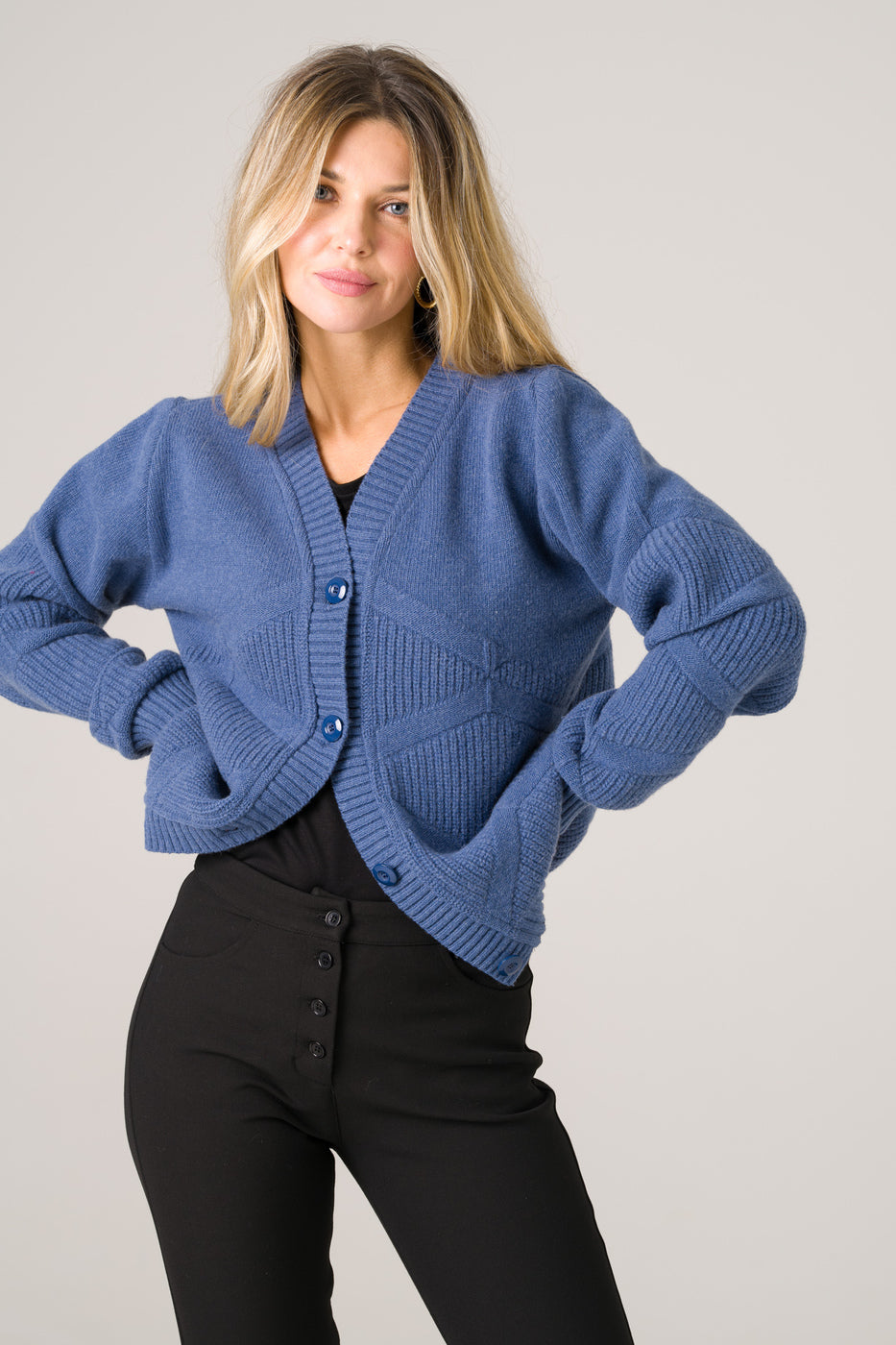
Tanaisie blue vest
The advantages of merino wool for your clothes
Unparalleled comfort and softness
The comfort of merino wool is unmatched by any other natural fiber. Wearing merino wool provides an immediate feeling of softness against the skin, without any irritation or itching. Unlike traditional wool, which can be scratchy and cause redness, merino is completely non-itchy thanks to its ultra-fine fibers that glide delicately over the skin.
This exceptional softness allows wool to be worn directly against the skin, even by those with sensitive skin. The fiber's natural flexibility also allows garments to move with your body effortlessly, offering complete freedom of movement. High-quality merino wool offers a silky feel that rivals cashmere, while being more durable and more affordable.
The reasons for exceptional comfort:
- Ultra-fine fibers (less than 20 microns for premium qualities)
- No irritation, even on sensitive skin
- Natural elasticity adapts to movement
- Thermoregulation maintains constant comfort
- Lightweight despite remarkable insulating properties
Durability and resistance
Investing in merino wool clothing means choosing pieces designed to last for years. Merino wool is naturally elastic and durable, able to withstand thousands of folds without losing its shape or showing premature wear. Thanks to its natural properties, a well-cared-for merino wool garment can easily last five to ten years, or even longer.
This exceptional longevity makes merino wool a worthwhile long-term investment, even if the initial purchase price may be higher than that of synthetic garments. The scaly structure of merino wool fibers gives them natural resistance to abrasion, while their inherent elasticity allows them to return to their original shape after each use. This durability perfectly aligns with a responsible and sustainable fashion approach, where quality is prioritized over quantity.
Versatility: from base layers to t-shirts
The diversity of merino wool products available today testifies to the extraordinary versatility of this fiber. Merino products now cover the entire wardrobe, from thermal underwear worn under other garments to stylish everyday T-shirts, sweaters, cardigans, dresses, and even accessories like hats and socks. Merino wool clothing adapts to all situations and all seasons. A merino wool T-shirt can be worn on its own in summer thanks to its breathable properties, or as a base layer in winter under a sweater.
This exceptional adaptability simplifies your wardrobe while guaranteeing optimal comfort in all circumstances. Many sustainable fashion brands, aware of the numerous advantages of this fiber, are now incorporating merino wool into their essential collections.
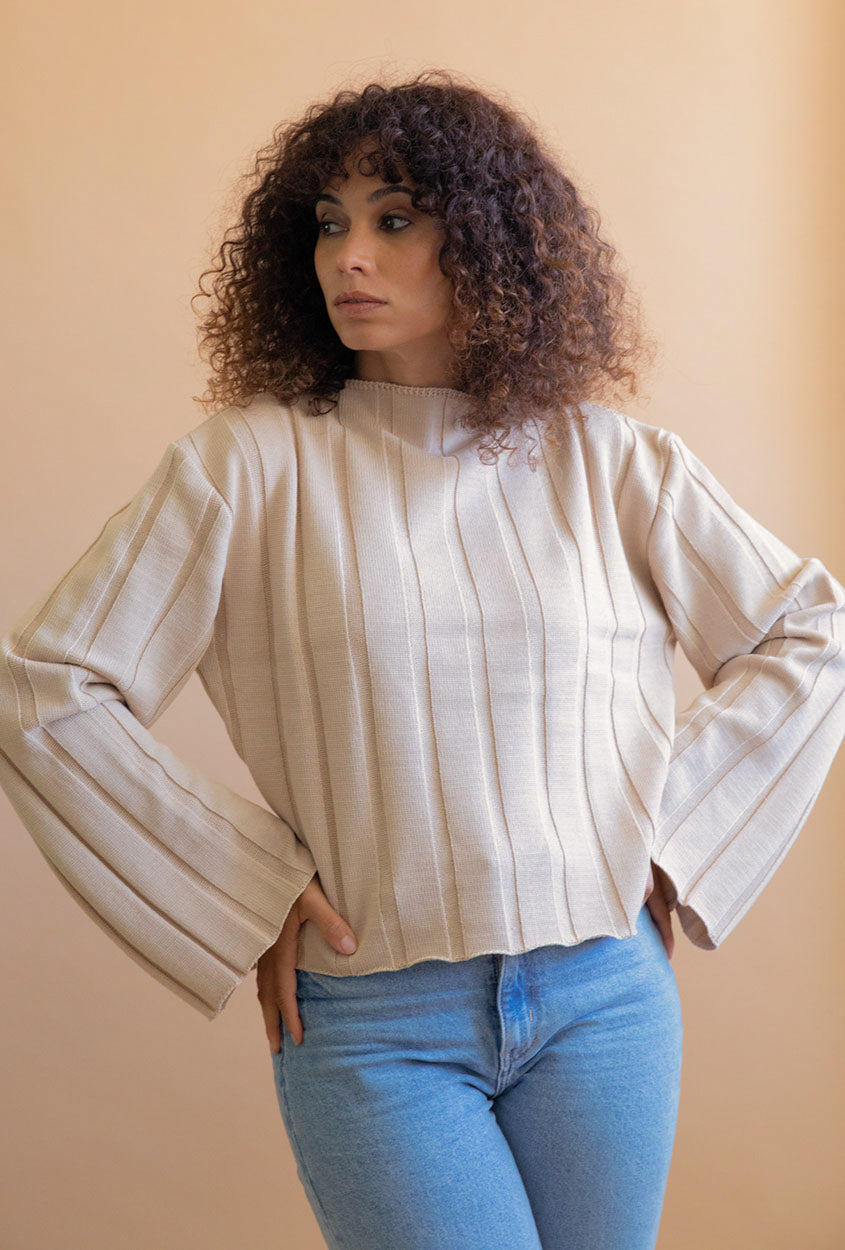
Beige Nashi sweater
Merino wool vs. other fibers: the comparison
Merino wool vs. synthetic fibers
A comparison between merino wool and synthetic materials like polyester or nylon reveals fundamental differences. While synthetic fabrics are often chosen for their lower cost and ease of care, they cannot compete with the natural properties of merino fiber.
Synthetic materials trap moisture against the skin, creating an environment conducive to bacterial growth and therefore unpleasant odors. Wool offers a natural breathability that synthetic fibers cannot replicate, even with the most advanced technologies. Environmentally, the difference is even more pronounced: Merino wool is biodegradable and renewable, while synthetic materials are derived from petroleum and take hundreds of years to decompose.
A comparative study conducted in 2024 by the Textile Exchange demonstrated that the production of merino wool generates 60% less CO2 emissions than that of equivalent polyester.
Merino wool vs. classic wool (traditional virgin wool)
Although both come from sheep, merino wool and traditional virgin wool have significant differences. Classic wool, from standard sheep breeds, has thicker fibers (30 to 40 microns) that create its characteristic scratchy feel.
Wool certainly provides effective warmth, but it doesn't offer the same comfort against the skin. Merino wool fibers, twice as fine, completely eliminate this problem. Merino wool offers superior thermal regulation thanks to its more complex microscopic structure.
Furthermore, merino wool offers superior resistance to pilling and retains its new appearance longer. For garments intended to be worn directly against the skin, merino wool is the obvious choice, while traditional wool remains a suitable option for chunky sweaters worn over other layers.
The advantages and disadvantages
To provide a complete and honest overview, it is important to examine the advantages and disadvantages of merino wool in a comparative table:
| Criteria | Merino wool | Synthetic Fibers | Traditional Wool |
|---|---|---|---|
| Comfort | Excellent, doesn't itch | Variable, may cause irritation | Can scratch |
| Thermoregulation | Exceptional, natural | Limited | Good but less refined |
| Odor remover | Naturally effective | It traps odors | Moderate |
| Sustainability | Very high (5-10 years+) | Average (1-3 years) | High |
| Price | Pupil | Down | AVERAGE |
| Interview | Delicate, requires fewer washes | Easy, frequent washing | Delicate |
| Environmental impact | Biodegradable, renewable | Pollutant, petroleum derivative | Biodegradable |
| Drying | Slow | Fast | Slow |
Merino wool is unique in that it combines virtually all the advantages without major compromise, except for its higher initial price which is largely justified by its exceptional durability.
Merino wool: a sustainable and responsible choice
A biodegradable and renewable fiber
In a context where the environmental impact of fashion is being scrutinized more and more closely, merino wool stands out as a truly sustainable solution. Merino wool is biodegradable: when it reaches the end of its life, it decomposes naturally within a few years, releasing valuable nutrients into the soil rather than persisting for centuries like microplastics from synthetic fibers. Merino wool is a naturally renewable resource: sheep produce their fleece continuously, year after year, without depleting the planet's resources.
According to data published in 2024 by the International Wool Textile Organisation (IWTO), merino wool has a carbon footprint 40% lower than that of conventional cotton and 75% lower than that of polyester. This natural ability to sequester carbon during the wool's growth, combined with its complete biodegradability, makes merino wool one of the most environmentally friendly fibers available today.
Production and ethics
The ethical implications of Merino wool production deserve special attention. The origin of quality Merino wool must be traceable and certified to guarantee respect for animal welfare. International standards such as the Responsible Wool Standard (RWS) and ZQ Merino ensure that Merino sheep are treated humanely, with access to quality pastures, appropriate veterinary care, and a ban on controversial practices. Producers of quality Merino also commit to sustainable land management practices, preserving biodiversity and ecosystem health.
When choosing merino wool clothing, looking for these certifications ensures that your purchase is truly responsible. Many ethical fashion brands now prioritize short and transparent supply chains, allowing for complete traceability from sheep to finished garment.
How to care for your merino wool clothing
Daily washing and care
Caring for your merino wool products is simpler than you might think, especially thanks to the natural properties of the fiber. Contrary to popular belief, washing merino wool doesn't require excessive precautions, although a gentle touch is recommended.
The first golden rule is to wash less frequently: thanks to the natural odor-resistant properties of merino wool, simply airing after use is often enough to freshen the garment.
When washing becomes necessary, use cold or lukewarm water (maximum 30°C) with a mild detergent specifically designed for wool.
Avoid high-speed spinning, which can damage the fibers, and opt for flat drying in the open air, away from direct sunlight. These simple steps will help preserve the exceptional properties of merino wool and significantly extend the life of your garments.
Practical maintenance tips:
- Air regularly rather than washing systematically
- Wash at a maximum of 30°C on a wool or delicate cycle.
- Use a special wool detergent, without enzymes.
- Never use fabric softener, as it can clog the fibers.
- Dry flat to preserve the original shape
- Avoid tumble drying and ironing at high temperatures
- Store folded rather than hanging to avoid deformation
Article summary
Merino wool has established itself as the ultimate natural fiber for anyone seeking performance, comfort, and durability. Its thermoregulating properties, intelligent moisture management, natural odor-resistant capabilities, and unparalleled comfort make merino wool an obvious choice for a modern and sustainable wardrobe.
Beyond its many practical advantages, choosing merino wool clothing represents a concrete commitment to more sustainable and ethical fashion. Thanks to its exceptional natural properties, merino wool offers a credible and high-performing alternative to polluting synthetic fibers. Merino wool is the ideal choice for those who refuse to compromise between style, comfort, and environmental awareness.
By investing in quality merino wool pieces, you're building a timeless wardrobe that will faithfully accompany you for years, while reducing your environmental impact. In a world where fashion must reinvent itself to become more responsible, merino wool is paving the way towards a textile future that is more respectful of our planet and our well-being.