
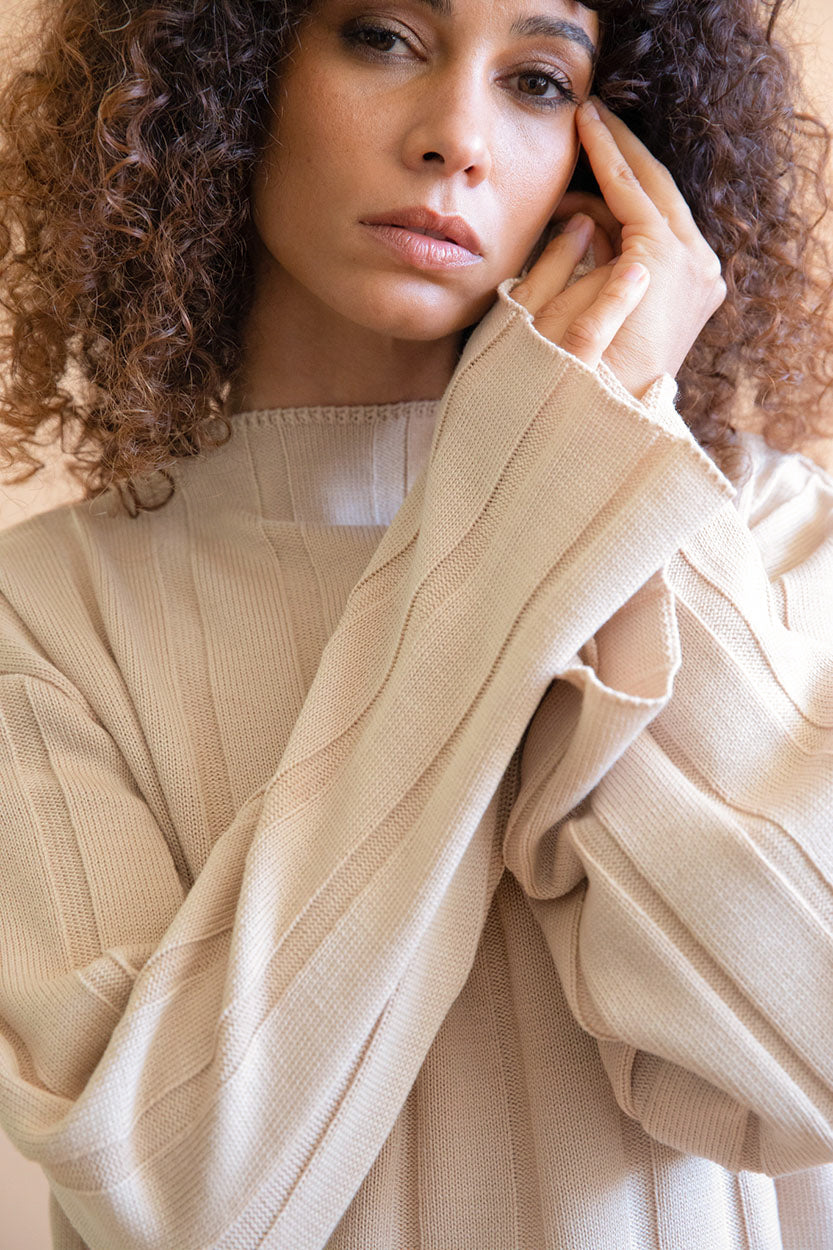


Switzerland may not be the first country that comes to mind when we think about fashion. Yet it is home to numerous clothing brands with very different identities, ranging from century-old luxury houses to younger labels focusing on natural materials, small production runs or more local manufacturing.
What brings them together is not necessarily clothing made entirely in Switzerland. Some brands design their collections in Geneva, Zurich, St. Gallen or the Grisons before producing them in Europe or working with specialised workshops abroad. Others, on the contrary, have chosen to keep a significant part of their manufacturing within Switzerland.
To better understand the diversity of Swiss fashion today, here are several Swiss women's clothing brands worth knowing, along with their approaches, styles and distinctive characteristics.
What really defines a Swiss clothing brand?
Talking about a “Swiss brand” does not automatically mean talking about clothing made in Switzerland.
A brand can be founded and managed in Switzerland, develop its collections and identity there, while relying on European workshops for production. Conversely, some labels have kept part of their manufacturing within the country, particularly for knitwear, wool garments or pieces that require specific expertise.
This diversity is particularly visible among the brands presented below. Some stand out for their precision and minimalism, while others are known for their prints, artisanal approach or commitment to more transparent production.
1. Avani Apparel, womenswear designed in Geneva
Founded in Switzerland, Avani Apparel develops its collections in Geneva around a simple idea: creating women's clothing that is versatile enough to be worn regularly, rather than multiplying highly seasonal pieces.
The collections favour feminine silhouettes that are easy to combine and designed to work just as well for a day at the office as for a more dressed-up occasion. The brand also places considerable importance on its choice of materials, including TENCEL™, Modal™, ECOVERO™, linen and merino wool.
The garments are designed in Switzerland, while production is entrusted to European workshops. The aim is also to provide greater visibility into the materials used and the way the clothes are produced.
This approach can also be seen in the way the wardrobe is built. The women's dresses, for example, are designed to be easily restyled for different occasions, while the women's blouses and shirts can be used to create both professional and more casual outfits.
Avani therefore sits at the intersection of several trends shaping contemporary Swiss fashion: understated design, European production, careful attention to materials and a desire to create clothes that remain relevant beyond a single season.

2. Akris, the major fashion house from St. Gallen
It is difficult to talk about Swiss fashion without mentioning Akris.
Founded in St. Gallen in 1922 by Alice Kriemler-Schoch, the house began by making aprons before gradually developing into an international fashion house.
Its universe is very different from that of many younger independent brands. Akris operates within the luxury market and has become particularly well known for the precision of its cuts, its research into materials, its double-face fabrics and its use of textile expertise associated with the St. Gallen region.
Its aesthetic generally relies on relatively clean lines and understated sophistication.
Akris therefore represents a more historical and established side of Swiss fashion: a house capable of developing an international identity while maintaining particularly strong roots in Switzerland.
3. Sanikai, a contemporary approach to responsible luxury
In Zurich, Sanikai offers another interpretation of Swiss fashion.
The brand develops a high-end women's wardrobe and places significant emphasis on materials, production volumes and the way its garments are made.
Part of its approach is based on small production runs and made-to-order manufacturing. This model helps limit the production of garments that may ultimately remain unsold, while maintaining a positioning focused more strongly on luxury and creativity.
Its aesthetic can be more distinctive than that of brands favouring very pronounced minimalism. Dresses, blouses and structured pieces form a universe that seeks to combine contemporary design with a thoughtful approach to production.
Above all, Sanikai illustrates an important reality: a brand seeking to develop more responsible fashion does not necessarily have to adopt a particularly understated or functional aesthetic.
4. KOMANA, prints and artisanal craftsmanship
KOMANA brings yet another perspective to Swiss fashion.
The label was created by sisters Nina and Livia and has developed a particularly recognisable identity centred around prints, colour and graphic work.
In contrast to the very clean lines often associated with Swiss design, KOMANA favours more expressive patterns. Its creations can begin with drawings, paintings or collages before being transferred onto textiles.
Production then relies on different forms of expertise and specialised partners, particularly for certain artisanal printing techniques.
KOMANA is therefore a good example of a brand whose identity is developed in Switzerland without necessarily seeking to carry out every stage of production within the country.
In this case, the brand's Swiss identity lies more in its creative universe, product development and the way it selects its production partners.
5. Muntagnard, Swiss minimalism and textile research
Originating from the Grisons, Muntagnard builds much of its identity around design, garment durability and textile research.
Design and development take place in Switzerland, while manufacturing may be divided between Switzerland and various European partners depending on the garments concerned.
One of the most interesting aspects of the brand is its work with materials. Wool plays an important role in some of its collections, alongside other fibres selected for their properties and durability.
The aesthetic remains relatively understated, with garments designed to be worn for a long time rather than created solely in response to a short-lived trend.
This focus on materials can also be found at Avani. For women looking for this type of textile, the brand offers a selection of merino wool clothing as well as TENCEL™ clothing.
6. erfolg, knitwear made in Switzerland
Among the labels that have maintained a particularly strong connection with Swiss manufacturing, erfolg occupies an interesting position.
Founded in Basel in the 1990s, the brand has notably developed around T-shirts and knitwear.
Its range includes sweaters, cardigans and other garments made from materials such as wool, cotton and linen. The brand also highlights the fact that part of its production is carried out in Switzerland.
This approach distinguishes erfolg from many Swiss brands that have chosen to develop their products locally while moving manufacturing to other European countries.
For people who place particular importance on local manufacturing, erfolg therefore represents an interesting brand to discover.
Swiss brands do not all share the same vision of fashion
Above all, these examples show that there is no single definition of Swiss fashion.
Akris represents a long tradition of luxury and textile expertise. erfolg places a strong emphasis on local production. Muntagnard focuses on textile innovation and garment durability. KOMANA stands out through its prints and creative approach. Sanikai develops a model oriented more towards high-end clothing and small production runs.
Avani occupies another position again, with women's clothing designed in Switzerland and produced in Europe, based on the idea of a versatile wardrobe and the careful selection of materials.
For consumers, the question is therefore less about finding “the best Swiss brand” and more about identifying what they genuinely expect from a garment and from a brand.
How to choose a Swiss women's clothing brand?
The country in which a company is headquartered is not enough to assess the quality or responsibility of its clothing.
Several criteria can provide a better understanding of what you are buying.
Look at where the clothes are made
Is the garment made in Switzerland, in another European country or elsewhere?
Production abroad is not necessarily problematic. However, it is worth checking whether the brand clearly explains where its garments are produced and what types of partners it works with.
Pay attention to materials
The composition of a garment is another important consideration.
Natural fibres, man-made cellulosic fibres, recycled materials and synthetic fibres all have different properties.
The choice therefore depends as much on expectations regarding durability as it does on the desired level of comfort, the season and the intended use of the garment.
Avani, for example, offers several collections organised by material, including organic cotton clothing, alongside its merino wool and TENCEL™ collections.
Choose clothes that are easy to wear
The durability of a garment does not depend solely on its composition.
A well-designed garment that is easy to combine and suitable for several occasions will generally be more likely to be worn regularly.
A blouse that can be worn to the office as easily as with jeans at the weekend, a dress that can be dressed up or styled more casually, or a simple sweater that works with several different bottoms may bring more value to a wardrobe than a piece that is strongly tied to a particular trend.
Examine the brand's transparency
Finally, transparency often helps distinguish marketing claims from genuinely useful information.
A brand that can explain where its garments are made, which materials it uses, which certifications are relevant and how its collections are developed provides consumers with more concrete information on which to base an informed decision.

Swiss fashion, far beyond “Swiss Made”
Swiss fashion is ultimately far more diverse than it may initially appear.
It includes historic fashion houses, independent labels, knitwear specialists, luxury brands and newer companies seeking to rethink the way clothing is designed and produced.
Most importantly, “Swiss brand” does not automatically mean “clothing made in Switzerland”.
What matters instead is understanding where each brand creates its value: through design, materials, craftsmanship, local production, relationships with workshops or the durability of its products.
For consumers, this diversity means that it is now possible to discover Swiss brands corresponding to very different styles, budgets and manufacturing criteria, without having to limit themselves to a single vision of Swiss fashion.