


Building a sustainable wardrobe is not just about collecting “good basics”.
It’s about learning how to create a wardrobe that makes sense.
A wardrobe that lasts.
A wardrobe where every piece has its place.
Building a sustainable wardrobe also means imagining a responsible wardrobe, designed to last and adapt to everyday life.
At a time when fashion is constantly accelerating, going back to essentials becomes almost a luxury — the luxury of choosing less, but better.
Rethinking your wardrobe instead of following trends
A sustainable wardrobe is not built around trends, but around yourself.
What you actually wear.
What you feel good in.
What lasts through seasons without losing relevance.
Adopting responsible fashion means choosing versatile pieces that can adapt to different moments of the day, in a true slow fashion approach.
The pieces that structure a sustainable wardrobe
Rather than a fixed list, a sustainable wardrobe is built around pieces that interact with each other and create a responsible wardrobe.
Well-cut basics
A good t-shirt, a shirt, knitwear… These are the foundations of a wardrobe — the core pieces.
They should be well-cut, comfortable to wear and easy to style. These are the pieces that bring coherence to a sustainable wardrobe.
These basics are not just “simple” pieces: they are what allow stronger pieces to exist.
A well-cut t-shirt or shirt can:
- balance bold printed trousers
- soften a more structured jacket
- make a more statement piece wearable in everyday life
This balance between simplicity and character is what creates an interesting wardrobe.
👉 Discover our selection of timeless tops and everyday pieces
The right pair of trousers
Trousers are often underestimated, yet they shape an entire silhouette.
Straight, fluid or flared — the cut matters less than how it moves with you and fits into your daily life.
Ideally, your wardrobe includes:
- easy-to-wear fluid trousers
- a more structured pair
- and a good pair of jeans
Jeans are a key piece: when well chosen, they work in every season — with a t-shirt, knitwear, a shirt or a more elevated top (satin, a neckline, or textured fabrics).
A good pair of trousers should work both for everyday outfits with simple pieces and for more styled silhouettes, paired with a jacket or a blouse.
👉 Explore our selection of everyday bottoms and versatile pieces
A few strong but lasting pieces
A dress, a jacket, a coat, a printed blouse or a more structured shirt… These are the pieces that define your style.
They bring character to your wardrobe, but in a sustainable approach, they should remain easy to wear over time. Paired with basics, they naturally integrate into everyday outfits.
Comfortable knitwear
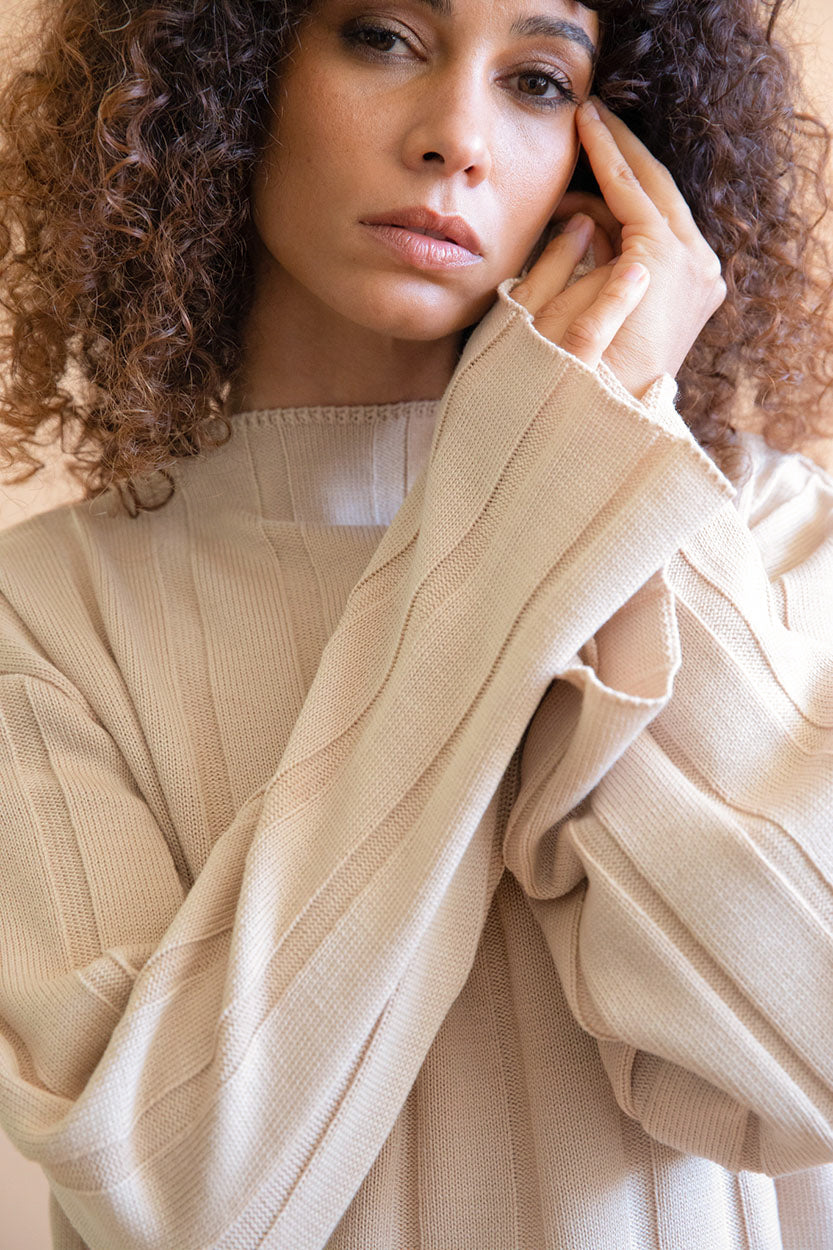
Knitwear is an essential piece that plays a key role in balancing a wardrobe. It allows you to work with layers, textures and volumes.
To wear with:
- a dress to tone down a more dressed-up look
- trousers for a minimalist silhouette
- a skirt to balance proportions
Good knitwear should be comfortable, breathable and pleasant on the skin. It is also a piece that evolves over time: it softens, relaxes and becomes more personal.
Depending on its cut, it can:
- structure a silhouette (cropped or fitted knitwear)
- add volume (oversized knitwear)
- create layering (fine knit under a jacket or over a t-shirt)
Fewer pieces, more possibilities
A sustainable wardrobe is not about quantity, but about coherence.
The goal is not to own many clothes, but clothes that work together.
Each piece should:
- easily combine with others
- be worn in different ways
- adapt to different seasons
The same trousers can be worn with a t-shirt and sandals in summer, then with knitwear and a coat in winter.
A dress can become a skirt with a knit, or turn into an evening piece with a more elevated top.
This versatility is what allows you to build a minimalist wardrobe without feeling limited.
Fabric as a starting point
Beyond cuts, fabric is essential. It often determines comfort and how a garment evolves over time.
A beautiful fabric lives with you: it softens, gains character and ages well.
Taking the time to check composition, feel the fabric and understand how it falls are simple habits that change the way you shop.
Building your wardrobe progressively
There is no need to change everything overnight. A sustainable wardrobe is built gradually.
Simple steps:
- sort through your wardrobe and identify what you actually wear
- avoid impulsive purchases
- choose pieces that are easy to combine
- invest in garments designed to last
A sustainable wardrobe is never fixed. It evolves with your lifestyle, your needs and your personal style.
Some pieces stay, others leave — but overall, it becomes more coherent over time.
This is what building a sustainable wardrobe is about: getting to know yourself better and refining your style.


